Tropical Rainforest Animal Adaptations
Adaptations for Tropical Rainforest Animals Have you ever wondered why animals in the rainforest look so unique? Tropical rainforest animals have cool adaptations to survive their lush, green world. Many have bright colors to warn predators or blend into colorful flowers. Some develop sticky feet to climb trees easily.
The tropical rain forest is one of several major biomes, or ecoregions, on planet Earth. Others include temperate forests, deserts, grasslands and tundra. Each biome has a distinct set of environmental conditions to which animals are adapted.
With warm temperatures, water and an abundance of food, tropical rain forests support thousands of wildlife species. The competition means organisms must adapt or develop specialized traits to compete for environmental resources. Many rain forest animals use adaptations to carve out their own niches and protect themselves from predators.
The tropical rainforest is hot and humid, but the substantial amount of rainfall yearly makes it an ideal environment for life. But with great competition for natural resources, how do animals living in this environment adapt for survival? In this article, let's explore the top seven tropical rainforest animal adaptations: camouflage, mimicry, having a limited diet, poison, reduction of size.
Animal Adaptations In The Rainforest
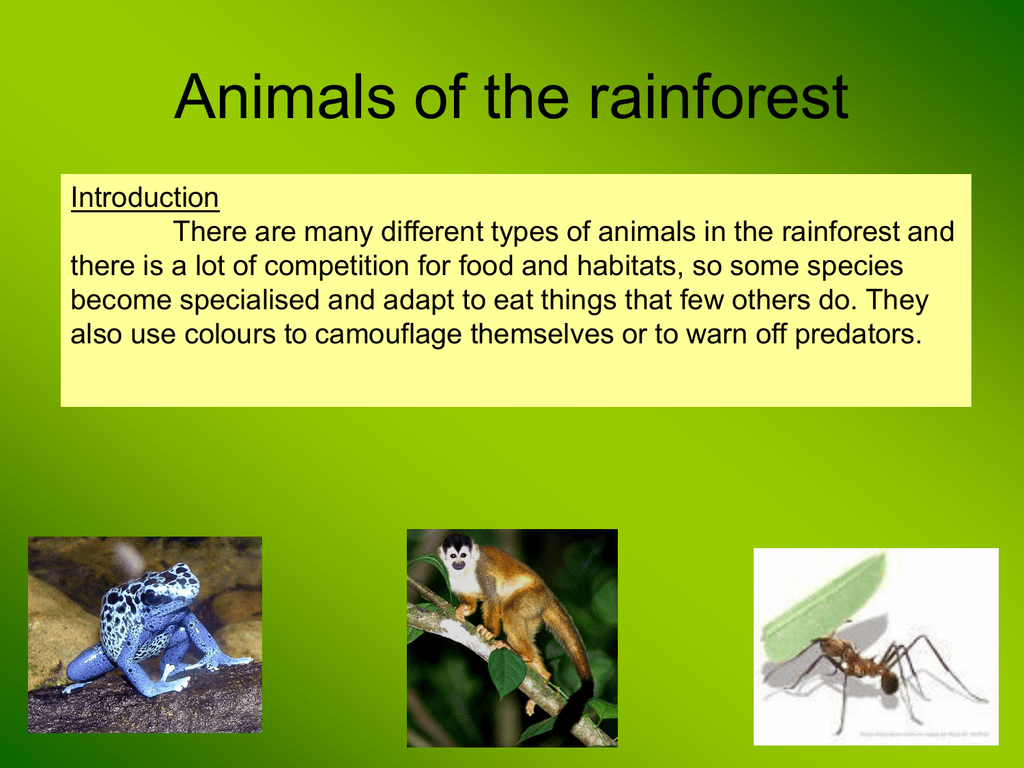
The tropical rain forest is one of several major biomes, or ecoregions, on planet Earth. Others include temperate forests, deserts, grasslands and tundra. Each biome has a distinct set of environmental conditions to which animals are adapted.
The tropical rainforest is hot and humid, but the substantial amount of rainfall yearly makes it an ideal environment for life. But with great competition for natural resources, how do animals living in this environment adapt for survival? In this article, let's explore the top seven tropical rainforest animal adaptations: camouflage, mimicry, having a limited diet, poison, reduction of size.
Adaptations for Tropical Rainforest Animals Have you ever wondered why animals in the rainforest look so unique? Tropical rainforest animals have cool adaptations to survive their lush, green world. Many have bright colors to warn predators or blend into colorful flowers. Some develop sticky feet to climb trees easily.
Plant and animal adaptations Plant adaptations The following adaptations allow plants to survive in the conditions of the rainforest.
Rainforest Animals And Their Adaptations
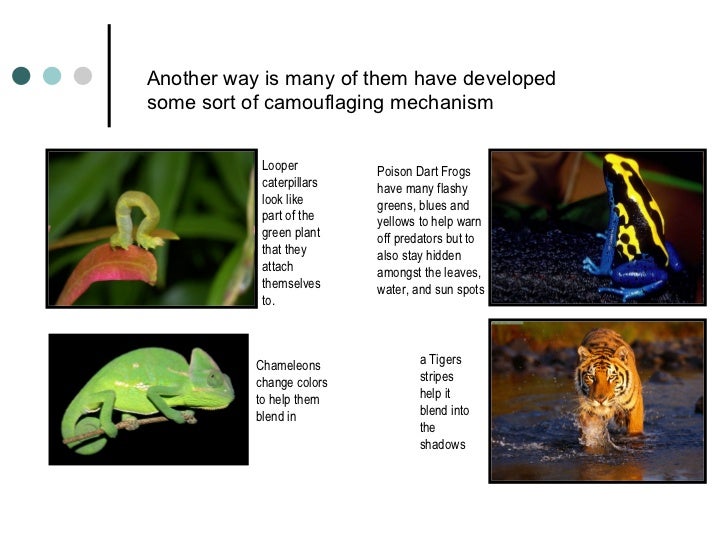
Learn about tropical rainforest animal adaptations. Explore examples of tropical rainforest animals and understand different types of adaptations, such as camouflage.
The tropical rain forest is one of several major biomes, or ecoregions, on planet Earth. Others include temperate forests, deserts, grasslands and tundra. Each biome has a distinct set of environmental conditions to which animals are adapted.
Adaptations for Tropical Rainforest Animals Have you ever wondered why animals in the rainforest look so unique? Tropical rainforest animals have cool adaptations to survive their lush, green world. Many have bright colors to warn predators or blend into colorful flowers. Some develop sticky feet to climb trees easily.
The tropical rainforest is hot and humid, but the substantial amount of rainfall yearly makes it an ideal environment for life. But with great competition for natural resources, how do animals living in this environment adapt for survival? In this article, let's explore the top seven tropical rainforest animal adaptations: camouflage, mimicry, having a limited diet, poison, reduction of size.
Tropical Rainforests Animals Adaptations
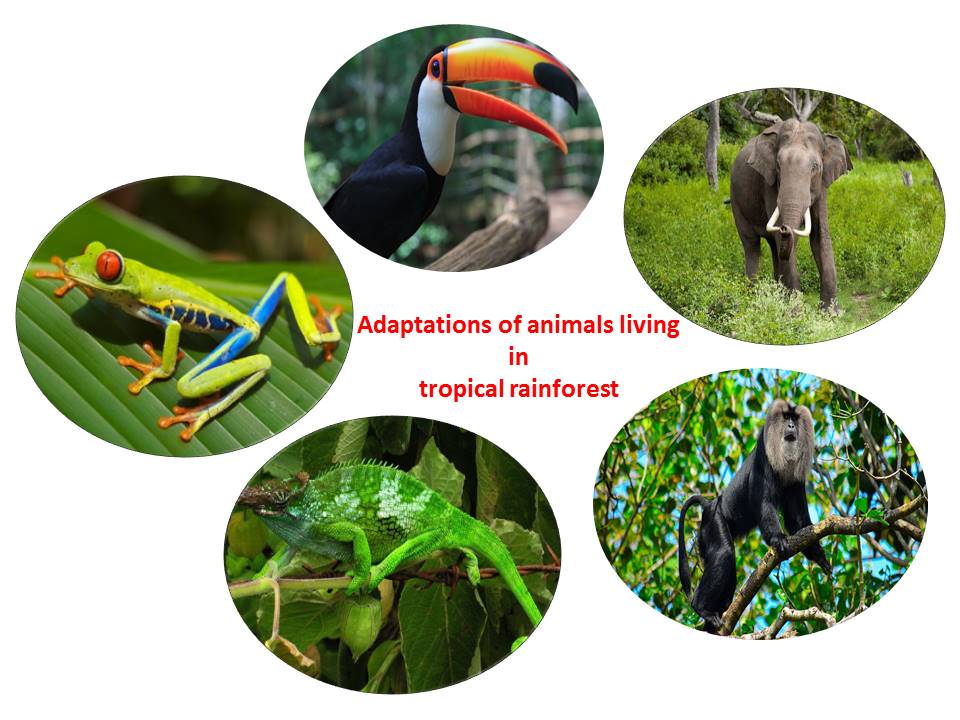
The tropical rain forest is one of several major biomes, or ecoregions, on planet Earth. Others include temperate forests, deserts, grasslands and tundra. Each biome has a distinct set of environmental conditions to which animals are adapted.
Which Adaptations Are Most Helpful in a Tropical Rainforest? In the tropical rainforest, specific adaptations play a significant role in an animal's survival. Camouflage is essential; animals like jaguars and leaf-tailed geckos blend into their surroundings, evading predators while ambushing prey.
Plant and animal adaptations Plant adaptations The following adaptations allow plants to survive in the conditions of the rainforest.
Learn all about what type of animals live in the rainforest biome - tropical, temperate rainforest animals and birds, with information about, adaptations, endangered status.
Tropical Rainforests Animals Adaptations
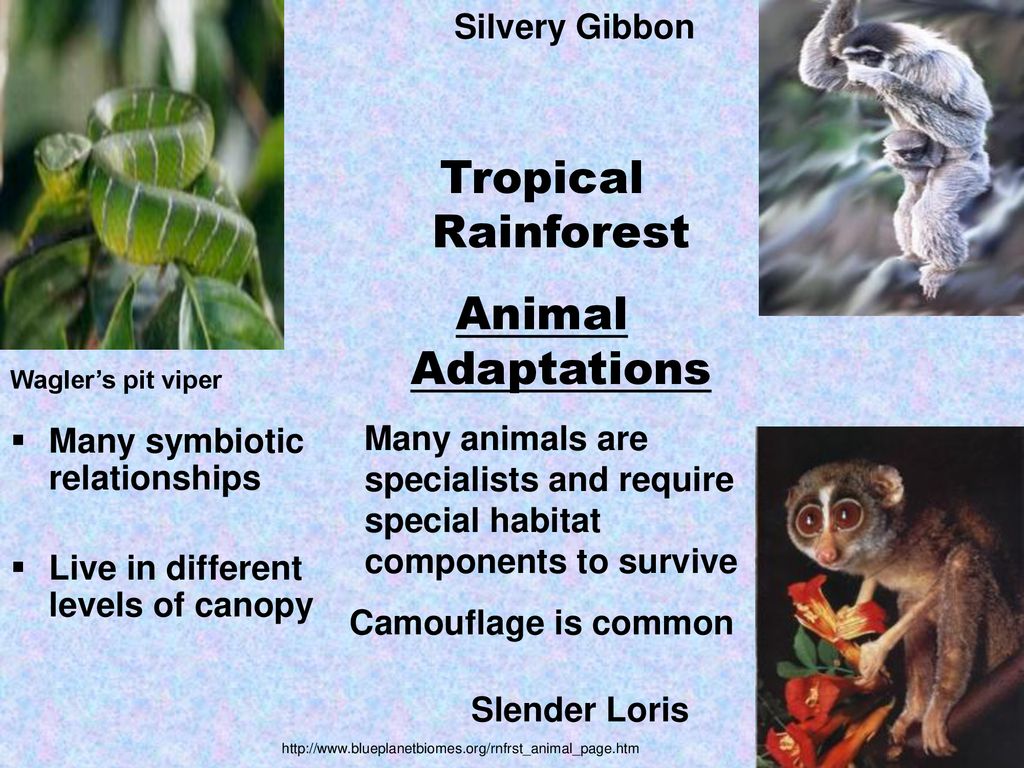
The tropical rain forest is one of several major biomes, or ecoregions, on planet Earth. Others include temperate forests, deserts, grasslands and tundra. Each biome has a distinct set of environmental conditions to which animals are adapted.
Learn all about what type of animals live in the rainforest biome - tropical, temperate rainforest animals and birds, with information about, adaptations, endangered status.
Adaptations for Tropical Rainforest Animals Have you ever wondered why animals in the rainforest look so unique? Tropical rainforest animals have cool adaptations to survive their lush, green world. Many have bright colors to warn predators or blend into colorful flowers. Some develop sticky feet to climb trees easily.
The tropical rainforest is hot and humid, but the substantial amount of rainfall yearly makes it an ideal environment for life. But with great competition for natural resources, how do animals living in this environment adapt for survival? In this article, let's explore the top seven tropical rainforest animal adaptations: camouflage, mimicry, having a limited diet, poison, reduction of size.

How has the jaguar adapted to the rainforest? Jaguars have adapted to the wet environment of the tropical rainforest. They are excellent swimmers, and unlike other cats, they seek out water for bathing and swimming. The jaguar's fur keeps it camouflaged in the tropical rainforest.
Adaptations of Animals in the Tropical Rain Forest. Size and Stature - With warm temperatures, water and an abundance of food, tropical rain forests support thousands of wildlife species. The competition means organisms must adapt or develop specialized traits to compete for environmental resources.
Adaptations for Tropical Rainforest Animals Have you ever wondered why animals in the rainforest look so unique? Tropical rainforest animals have cool adaptations to survive their lush, green world. Many have bright colors to warn predators or blend into colorful flowers. Some develop sticky feet to climb trees easily.
The tropical rain forest is one of several major biomes, or ecoregions, on planet Earth. Others include temperate forests, deserts, grasslands and tundra. Each biome has a distinct set of environmental conditions to which animals are adapted.

Learn all about what type of animals live in the rainforest biome - tropical, temperate rainforest animals and birds, with information about, adaptations, endangered status.
The tropical rain forest is one of several major biomes, or ecoregions, on planet Earth. Others include temperate forests, deserts, grasslands and tundra. Each biome has a distinct set of environmental conditions to which animals are adapted.
Adaptations of Animals in the Tropical Rain Forest. Size and Stature - With warm temperatures, water and an abundance of food, tropical rain forests support thousands of wildlife species. The competition means organisms must adapt or develop specialized traits to compete for environmental resources.
Adaptations for Tropical Rainforest Animals Have you ever wondered why animals in the rainforest look so unique? Tropical rainforest animals have cool adaptations to survive their lush, green world. Many have bright colors to warn predators or blend into colorful flowers. Some develop sticky feet to climb trees easily.
Tropical Forest Ecosystem
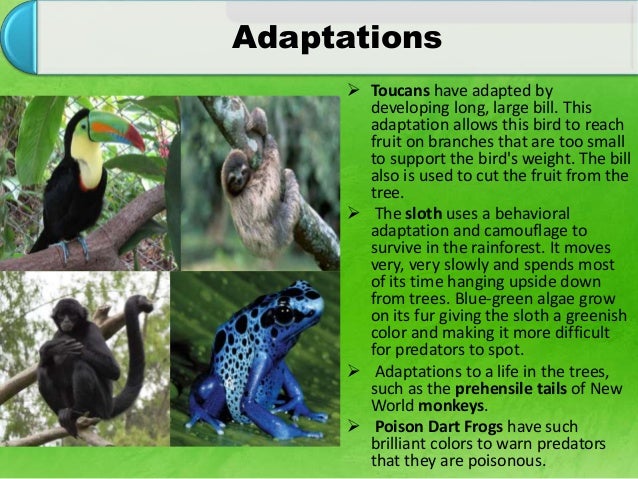
With warm temperatures, water and an abundance of food, tropical rain forests support thousands of wildlife species. The competition means organisms must adapt or develop specialized traits to compete for environmental resources. Many rain forest animals use adaptations to carve out their own niches and protect themselves from predators.
Which Adaptations Are Most Helpful in a Tropical Rainforest? In the tropical rainforest, specific adaptations play a significant role in an animal's survival. Camouflage is essential; animals like jaguars and leaf-tailed geckos blend into their surroundings, evading predators while ambushing prey.
Plant and animal adaptations Plant adaptations The following adaptations allow plants to survive in the conditions of the rainforest.
How has the jaguar adapted to the rainforest? Jaguars have adapted to the wet environment of the tropical rainforest. They are excellent swimmers, and unlike other cats, they seek out water for bathing and swimming. The jaguar's fur keeps it camouflaged in the tropical rainforest.
Amazon Rainforest Animals Adaptations List
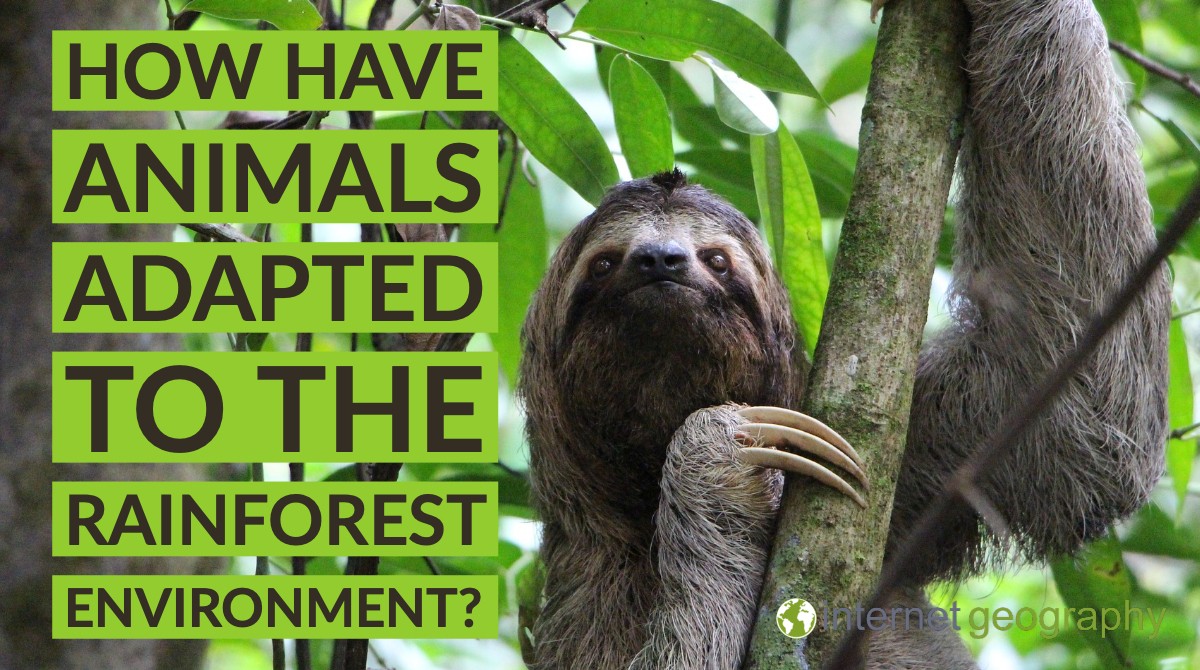
Adaptations of Animals in the Tropical Rain Forest. Size and Stature - With warm temperatures, water and an abundance of food, tropical rain forests support thousands of wildlife species. The competition means organisms must adapt or develop specialized traits to compete for environmental resources.
Which Adaptations Are Most Helpful in a Tropical Rainforest? In the tropical rainforest, specific adaptations play a significant role in an animal's survival. Camouflage is essential; animals like jaguars and leaf-tailed geckos blend into their surroundings, evading predators while ambushing prey.
Adaptations for Tropical Rainforest Animals Have you ever wondered why animals in the rainforest look so unique? Tropical rainforest animals have cool adaptations to survive their lush, green world. Many have bright colors to warn predators or blend into colorful flowers. Some develop sticky feet to climb trees easily.
Learn about tropical rainforest animal adaptations. Explore examples of tropical rainforest animals and understand different types of adaptations, such as camouflage.
Top 7 Tropical Rainforest Animal Adaptations | Biology Explorer
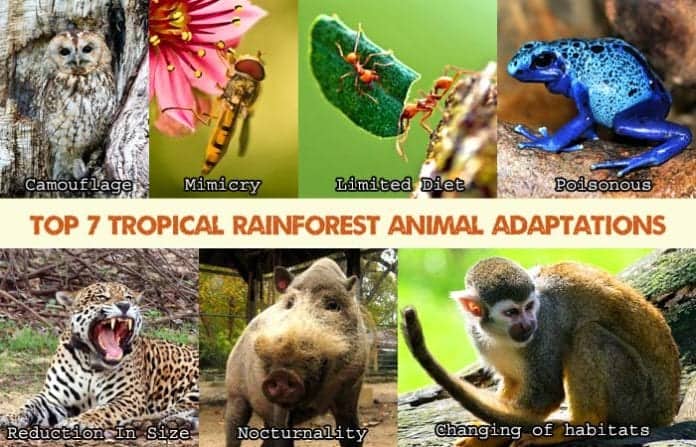
With warm temperatures, water and an abundance of food, tropical rain forests support thousands of wildlife species. The competition means organisms must adapt or develop specialized traits to compete for environmental resources. Many rain forest animals use adaptations to carve out their own niches and protect themselves from predators.
Which Adaptations Are Most Helpful in a Tropical Rainforest? In the tropical rainforest, specific adaptations play a significant role in an animal's survival. Camouflage is essential; animals like jaguars and leaf-tailed geckos blend into their surroundings, evading predators while ambushing prey.
Learn about tropical rainforest animal adaptations. Explore examples of tropical rainforest animals and understand different types of adaptations, such as camouflage.
Plant and animal adaptations Plant adaptations The following adaptations allow plants to survive in the conditions of the rainforest.
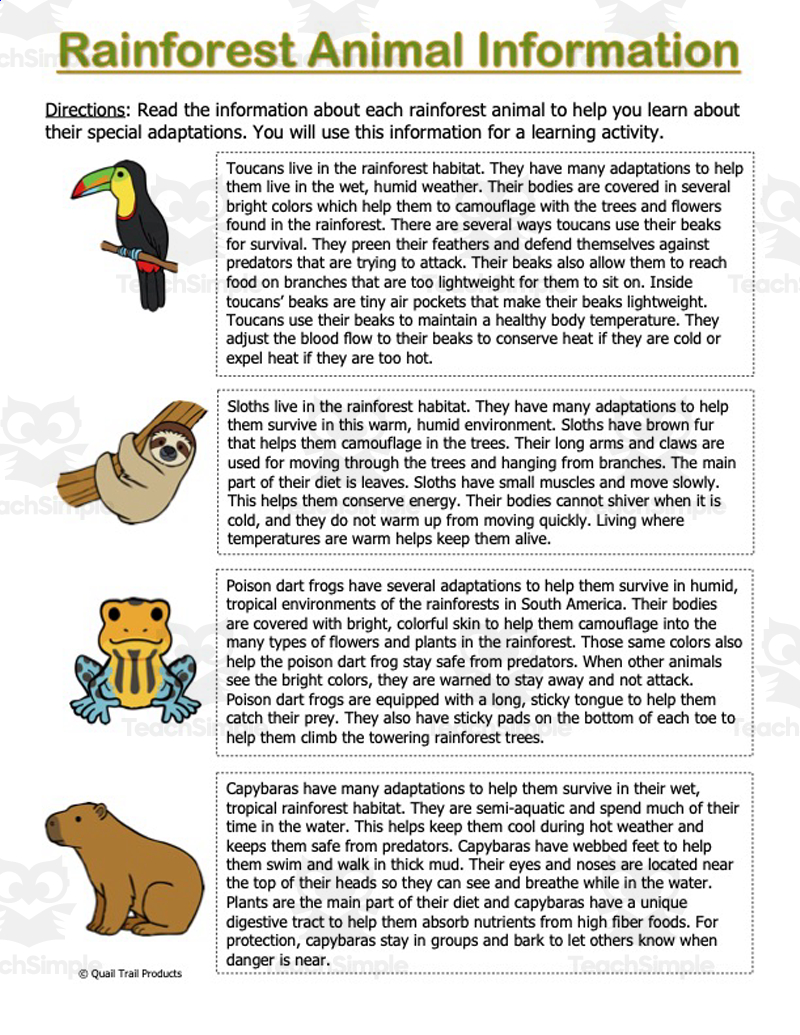
Adaptations for Tropical Rainforest Animals Have you ever wondered why animals in the rainforest look so unique? Tropical rainforest animals have cool adaptations to survive their lush, green world. Many have bright colors to warn predators or blend into colorful flowers. Some develop sticky feet to climb trees easily.
The tropical rain forest is one of several major biomes, or ecoregions, on planet Earth. Others include temperate forests, deserts, grasslands and tundra. Each biome has a distinct set of environmental conditions to which animals are adapted.
Learn about tropical rainforest animal adaptations. Explore examples of tropical rainforest animals and understand different types of adaptations, such as camouflage.
Which Adaptations Are Most Helpful in a Tropical Rainforest? In the tropical rainforest, specific adaptations play a significant role in an animal's survival. Camouflage is essential; animals like jaguars and leaf-tailed geckos blend into their surroundings, evading predators while ambushing prey.
Tropical Rainforests - Lesson 4 - Animal Adaptations | Teaching Resources
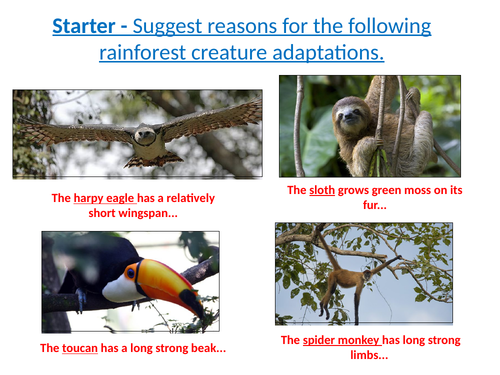
The tropical rain forest is one of several major biomes, or ecoregions, on planet Earth. Others include temperate forests, deserts, grasslands and tundra. Each biome has a distinct set of environmental conditions to which animals are adapted.
How has the jaguar adapted to the rainforest? Jaguars have adapted to the wet environment of the tropical rainforest. They are excellent swimmers, and unlike other cats, they seek out water for bathing and swimming. The jaguar's fur keeps it camouflaged in the tropical rainforest.
Learn about tropical rainforest animal adaptations. Explore examples of tropical rainforest animals and understand different types of adaptations, such as camouflage.
Learn all about what type of animals live in the rainforest biome - tropical, temperate rainforest animals and birds, with information about, adaptations, endangered status.
Rainforest Animals And Their Adaptations - Vrogue.co

How has the jaguar adapted to the rainforest? Jaguars have adapted to the wet environment of the tropical rainforest. They are excellent swimmers, and unlike other cats, they seek out water for bathing and swimming. The jaguar's fur keeps it camouflaged in the tropical rainforest.
The tropical rain forest is one of several major biomes, or ecoregions, on planet Earth. Others include temperate forests, deserts, grasslands and tundra. Each biome has a distinct set of environmental conditions to which animals are adapted.
With warm temperatures, water and an abundance of food, tropical rain forests support thousands of wildlife species. The competition means organisms must adapt or develop specialized traits to compete for environmental resources. Many rain forest animals use adaptations to carve out their own niches and protect themselves from predators.
Adaptations for Tropical Rainforest Animals Have you ever wondered why animals in the rainforest look so unique? Tropical rainforest animals have cool adaptations to survive their lush, green world. Many have bright colors to warn predators or blend into colorful flowers. Some develop sticky feet to climb trees easily.
PPT - Which Biome Is Home To The: PowerPoint Presentation - ID:5517764

Adaptations for Tropical Rainforest Animals Have you ever wondered why animals in the rainforest look so unique? Tropical rainforest animals have cool adaptations to survive their lush, green world. Many have bright colors to warn predators or blend into colorful flowers. Some develop sticky feet to climb trees easily.
Learn about tropical rainforest animal adaptations. Explore examples of tropical rainforest animals and understand different types of adaptations, such as camouflage.
The tropical rainforest is hot and humid, but the substantial amount of rainfall yearly makes it an ideal environment for life. But with great competition for natural resources, how do animals living in this environment adapt for survival? In this article, let's explore the top seven tropical rainforest animal adaptations: camouflage, mimicry, having a limited diet, poison, reduction of size.
How has the jaguar adapted to the rainforest? Jaguars have adapted to the wet environment of the tropical rainforest. They are excellent swimmers, and unlike other cats, they seek out water for bathing and swimming. The jaguar's fur keeps it camouflaged in the tropical rainforest.
Adaptations To The Tropical Rainforest - Presentation In GCSE Geography
The tropical rainforest is hot and humid, but the substantial amount of rainfall yearly makes it an ideal environment for life. But with great competition for natural resources, how do animals living in this environment adapt for survival? In this article, let's explore the top seven tropical rainforest animal adaptations: camouflage, mimicry, having a limited diet, poison, reduction of size.
How has the jaguar adapted to the rainforest? Jaguars have adapted to the wet environment of the tropical rainforest. They are excellent swimmers, and unlike other cats, they seek out water for bathing and swimming. The jaguar's fur keeps it camouflaged in the tropical rainforest.
Adaptations of Animals in the Tropical Rain Forest. Size and Stature - With warm temperatures, water and an abundance of food, tropical rain forests support thousands of wildlife species. The competition means organisms must adapt or develop specialized traits to compete for environmental resources.
Learn about tropical rainforest animal adaptations. Explore examples of tropical rainforest animals and understand different types of adaptations, such as camouflage.

How has the jaguar adapted to the rainforest? Jaguars have adapted to the wet environment of the tropical rainforest. They are excellent swimmers, and unlike other cats, they seek out water for bathing and swimming. The jaguar's fur keeps it camouflaged in the tropical rainforest.
With warm temperatures, water and an abundance of food, tropical rain forests support thousands of wildlife species. The competition means organisms must adapt or develop specialized traits to compete for environmental resources. Many rain forest animals use adaptations to carve out their own niches and protect themselves from predators.
Adaptations of Animals in the Tropical Rain Forest. Size and Stature - With warm temperatures, water and an abundance of food, tropical rain forests support thousands of wildlife species. The competition means organisms must adapt or develop specialized traits to compete for environmental resources.
Adaptations for Tropical Rainforest Animals Have you ever wondered why animals in the rainforest look so unique? Tropical rainforest animals have cool adaptations to survive their lush, green world. Many have bright colors to warn predators or blend into colorful flowers. Some develop sticky feet to climb trees easily.
How has the jaguar adapted to the rainforest? Jaguars have adapted to the wet environment of the tropical rainforest. They are excellent swimmers, and unlike other cats, they seek out water for bathing and swimming. The jaguar's fur keeps it camouflaged in the tropical rainforest.
The tropical rainforest is hot and humid, but the substantial amount of rainfall yearly makes it an ideal environment for life. But with great competition for natural resources, how do animals living in this environment adapt for survival? In this article, let's explore the top seven tropical rainforest animal adaptations: camouflage, mimicry, having a limited diet, poison, reduction of size.
With warm temperatures, water and an abundance of food, tropical rain forests support thousands of wildlife species. The competition means organisms must adapt or develop specialized traits to compete for environmental resources. Many rain forest animals use adaptations to carve out their own niches and protect themselves from predators.
Plant and animal adaptations Plant adaptations The following adaptations allow plants to survive in the conditions of the rainforest.
The tropical rain forest is one of several major biomes, or ecoregions, on planet Earth. Others include temperate forests, deserts, grasslands and tundra. Each biome has a distinct set of environmental conditions to which animals are adapted.
Adaptations for Tropical Rainforest Animals Have you ever wondered why animals in the rainforest look so unique? Tropical rainforest animals have cool adaptations to survive their lush, green world. Many have bright colors to warn predators or blend into colorful flowers. Some develop sticky feet to climb trees easily.
Learn all about what type of animals live in the rainforest biome - tropical, temperate rainforest animals and birds, with information about, adaptations, endangered status.
Learn about tropical rainforest animal adaptations. Explore examples of tropical rainforest animals and understand different types of adaptations, such as camouflage.
Which Adaptations Are Most Helpful in a Tropical Rainforest? In the tropical rainforest, specific adaptations play a significant role in an animal's survival. Camouflage is essential; animals like jaguars and leaf-tailed geckos blend into their surroundings, evading predators while ambushing prey.
Adaptations of Animals in the Tropical Rain Forest. Size and Stature - With warm temperatures, water and an abundance of food, tropical rain forests support thousands of wildlife species. The competition means organisms must adapt or develop specialized traits to compete for environmental resources.